



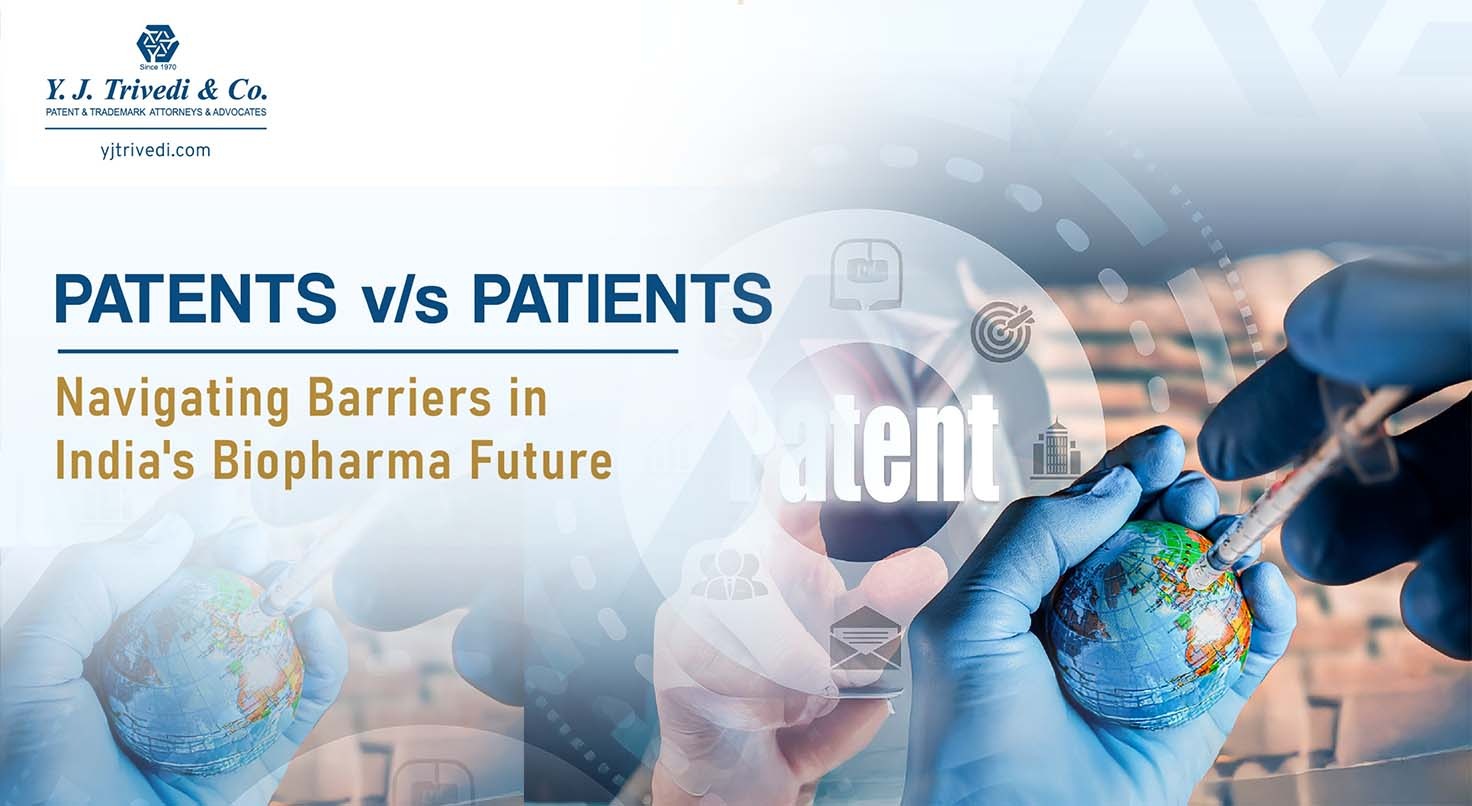
Imagine a cancer patient waiting for a breakthrough therapy that could save their life. The drug exists it is a biologic, a cutting-edge medicine derived from living cells but the price is so high that it remains out of reach. Now imagine a cheaper alternative, a biosimilar, offering the same clinical benefits at a fraction of the cost. This is the promise of biosimilars: hope made affordable.
Yet, between patients and these life-saving therapies lies a formidable barrier patents. India’s 2026 Union Budget, with its ₹10,000 crore Biopharma Shakti programme, has reignited the debate over how patents shape access to biologics and biosimilars.
Together, they define the future of medicine but also the battleground of patents.
Patents lie at the heart of the biologics and biosimilars debate, acting both as shields for innovation and barriers to access. Biologics, being complex medicines derived from living systems, are often surrounded by a dense web of overlapping patents commonly referred to as “patent thickets.” These patents don’t just protect the drug itself but also cover manufacturing processes, formulations, and delivery mechanisms, making it difficult for biosimilar manufacturers to enter the market. Innovator companies further extend their monopoly through evergreening, filing secondary patents on minor modifications to prolong exclusivity even after the primary patent expires. While such practices safeguard investments and encourage research, they also delay the arrival of affordable biosimilars, keeping prices high and limiting patient access. This tension between protecting innovation and ensuring affordability is what makes the patent puzzle so critical in shaping India’s biopharma future.
India has historically leaned toward public health without ignoring innovation:
This balanced approach reflects India’s dual commitment: protecting innovation while ensuring affordability.
The launch of the Biopharma Shakti programme in India’s 2026 Union Budget marks a turning point in the country’s pharmaceutical journey. With an ambitious ₹10,000 crore allocation over five years, the initiative is designed to build an end-to-end ecosystem for biologics and biosimilars—from research and development to manufacturing and regulatory support. This signals a strategic shift from India’s traditional dominance in generics toward advanced biopharmaceuticals, with the goal of capturing 5% of the global biopharma market. For domestic companies, it means greater resources to innovate and challenge patent barriers; for patients, it promises wider access to affordable therapies for cancer, diabetes, and autoimmune disorders. By combining funding, regulatory strengthening, and global ambition, Biopharma Shakti positions India not just as the “pharmacy of the world” but as a rising biopharma powerhouse that balances innovation with inclusivity.
The future of India’s biopharma sector hinges on how it manages the patents vs. patients debate. Strong patents encourage innovation, but unchecked monopolies restrict access. Biosimilars offer affordability, but they must overcome complex legal hurdles.
With Biopharma Shakti, India has an opportunity to redefine the global narrative: a biopharma powerhouse that balances innovation with inclusivity, ensuring that cutting-edge therapies are not just invented in India but also accessible to those who need them most.

Dhvani is a dedicated member of the Patent team with extensive experience in conducting prior art searches, drafting patent applications, and preparing FER (First Examination Report) responses across diverse technical fields. She specializes in patent prosecution, ensuring compliance with regulatory requirements and providing strategic insights for patentability and invalidation assessments. Her expertise enables seamless navigation of complex intellectual property landscapes. Dhvani holds an M.Sc. in Biotechnology from Nirma University, which enhances her technical proficiency in life sciences and biotechnology-related patents.
City Square, 2nd Floor, Opp. Kashiram Hall, Polytechnic, Ahmedabad – 380015, Gujarat (India).
info@yjtrivedi.com
5/56, Church road, Beawar – 305901, Rajasthan (India)
3000 Atrium Way, Suite 200-#253, Mt. Laurel, NJ 08054